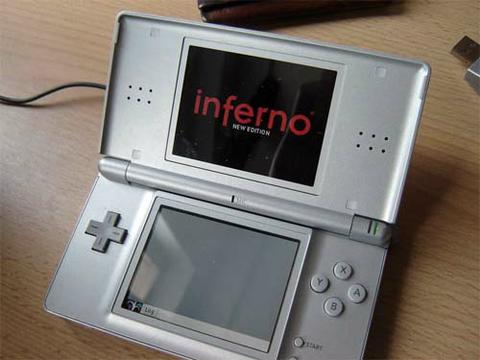
Inferno is an operating system for creating and supporting distributed services.
Inferno was first made in 1995 by members of Bell Labs’ Computer Science Research division to bring some principles of Plan 9 from Bell Labs over to other systems. Inferno is a distributed operating system based on three basic principles borrowed from Plan 9:
* Resources as files: all resources are represented as files within a hierarchical file system
* Namespaces: the application view of the network is a single, coherent namespace that appears as a hierarchical file system but may represent physically separated (locally or remotely) resources
* Standard communication protocol: a standard protocol, called Styx, is used to access all resources, both local and remote
Auto Lock (CSDEVCTRL) is another auto locking program which utilizes the Windows Locking for partial locking (phone related keys are active) or complete locking (no keys are active).
Changes:
30/07 – v3.22 – Added Sliding support. Various Fixes.
Basilisk II is an Open Source 68k Macintosh emulator.
Release notes from J.F.:
Made pspirkeyb files relative to the B2 directory. It’s probably why some people couldn’t get the IR keyboard to work – they didn’t have the proper files in the seplugins directory. Now they don’t need to worry about it. The files are now in the b2 directory and included with the program. It IS set to Palm, so if you have another keyboard, you’ll need to edit the pspirkeyb.ini file. I’ve verified this works and that the IRDA.prx is loaded by B2 on a Phat running 4.01 M33-2.
Compiled program with functions aligned to 64 bytes. This makes the program about 100 KB bigger, and about 6% faster.
GeeXboX is a media player software. It can play videos, play music (with visualization) and display photo slideshows.
Major new features: bluetooth (remote control, obex file push, networking and audio partially working), USB storage, USB ethernet, http/telnet/ftp server, netstreaming, image viewer, goom visuals for audio playback, … Most of the new features are fully or partially tested, some are not, yet.
Changes:
NTSC/PAL autodection (supposed to work)
improved support for widescreen mode
aspect ratio software compensation support
improved Wiimote connection/reconnection routine
user-friendlier handling of boot failure.